The Mid-Atlantic Chert Database

What is Chert?

Learn how chert is defined and classified, discover its formation processes, and explore physical and chemical variations in chert.

Definition

Archaeologists frequently use the term chert as an umbrella term to describe a  series of compact, hard rocks consisting primarily of cryptocrystalline varieties of silica minerals. 

Examples:

  • Agate
  • Chalcedony
  • Flint
  • Hornstone
  • Jasper
  • Novaculite
  • Onyx
  • Opal
  • Siliceous Shale
  • Radiolarite
  • Silicified Wood
  • Porcellanite

Each of the examples listed above can be classified and differentiated based on differences in mineralogy, structure, texture, and, when present, fossil inclusions.  

Chemically, these materials are dominated by silicon dioxide (SiO2) with unique concentrations of trace elements. 

Archaeologists routinely identify the geological sources of stone artifacts by characterizing physical and chemical variation among geological chert deposits. This process is known as lithic sourcing.

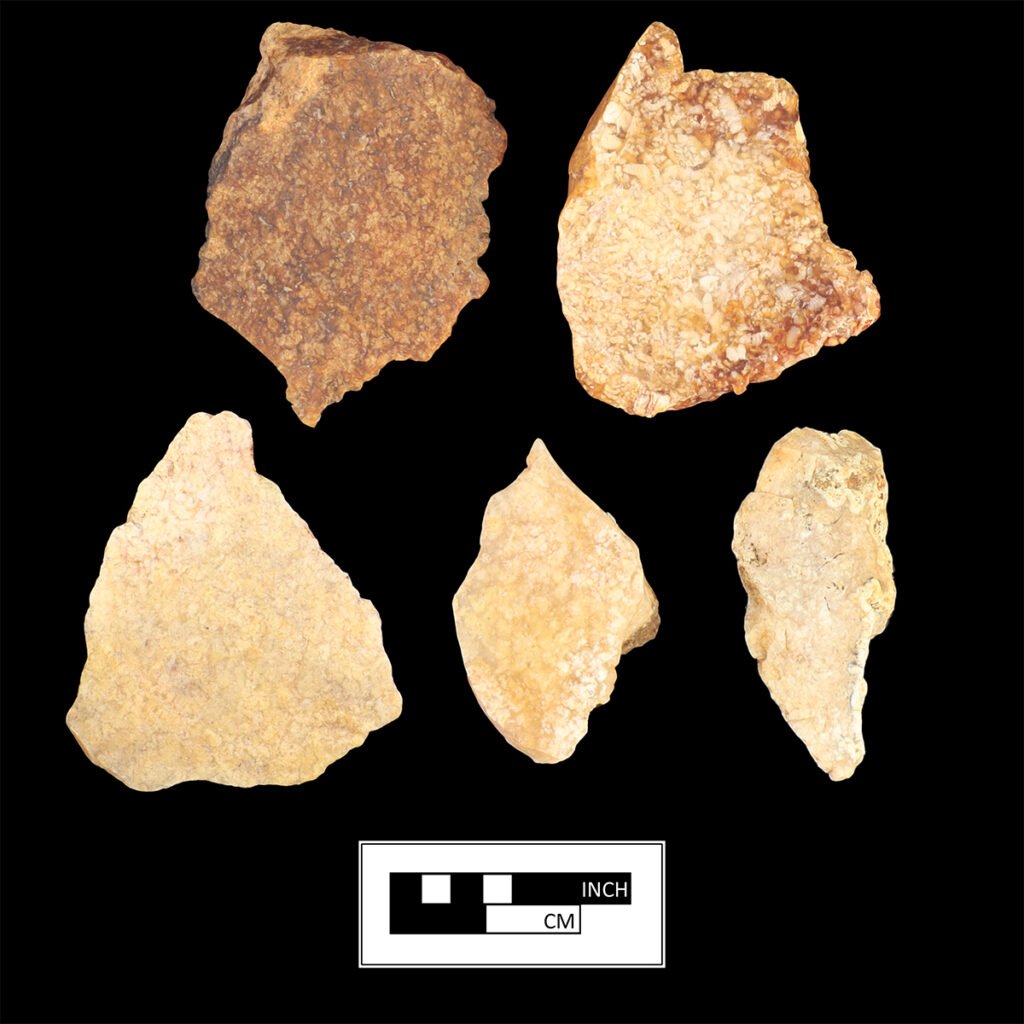
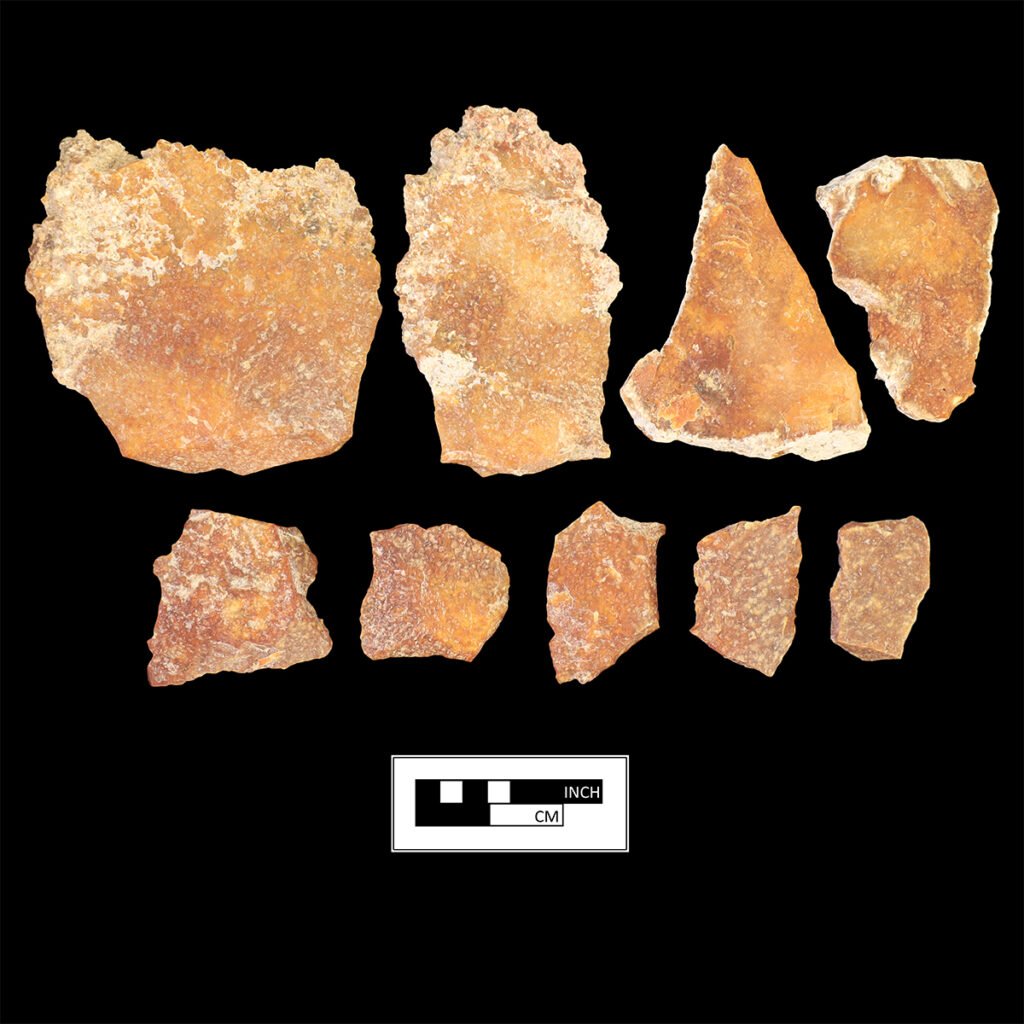
Chalcedony from Little Rocky Creek, VA (Left), and Reisterstown, MD (Right)

A. The fundamental tetrahedron for classifying sedimentary rocks. B-E. Four faces of the tetrahedron (Modified from Krumbein and Sloss 1956: Fig. 5)

Taxonomically, chert is chemical sedimentary rock formed by the secondary solution and redeposition of silica (quartz) over a restricted period of time in a restricted geographic area (Henderson 2007:392). 

The presence of common impurities in the area of deposition including water, clay, carbonate, and iron minerals, organic compounds, as well as the formation conditions of silica minerals, results in discrete visible, chemical, and structural variations (Luedtke 1992:10). 

The fundamental tetrahedron for classifying sedimentary rocks developed by Krumbein and Sloss (1956) reveals that there is a gradual transition from siliciclastic sedimentary rocks such as limestone and shale into chert (Lavin 1983:32). 

Within archaeological contexts, accurately distinguishing between these stone types is complicated and impractical, especially for CRM projects. When distinctions can be made; however, it provides data  essential to lithic source analysis.
How Chert Forms

Physical and Chemical Variation